
This week, I’m on holiday and I would love to keep this post to a sensible length so I can do more eating ice cream while looking at a lake. Unfortunately, this week we have Liz Berry’s blinding verse novel ‘The Home Child’ (Chatto&Windus, 2023) which will not make that easy. I love this book so much that both times I’ve read it I finished it outside because I couldn’t leave it behind when I had to go out (the first time, at a fete with my brass band; the second, this week, on an island on the aforementioned lake. I’ve got to stop taking books on kayaks).
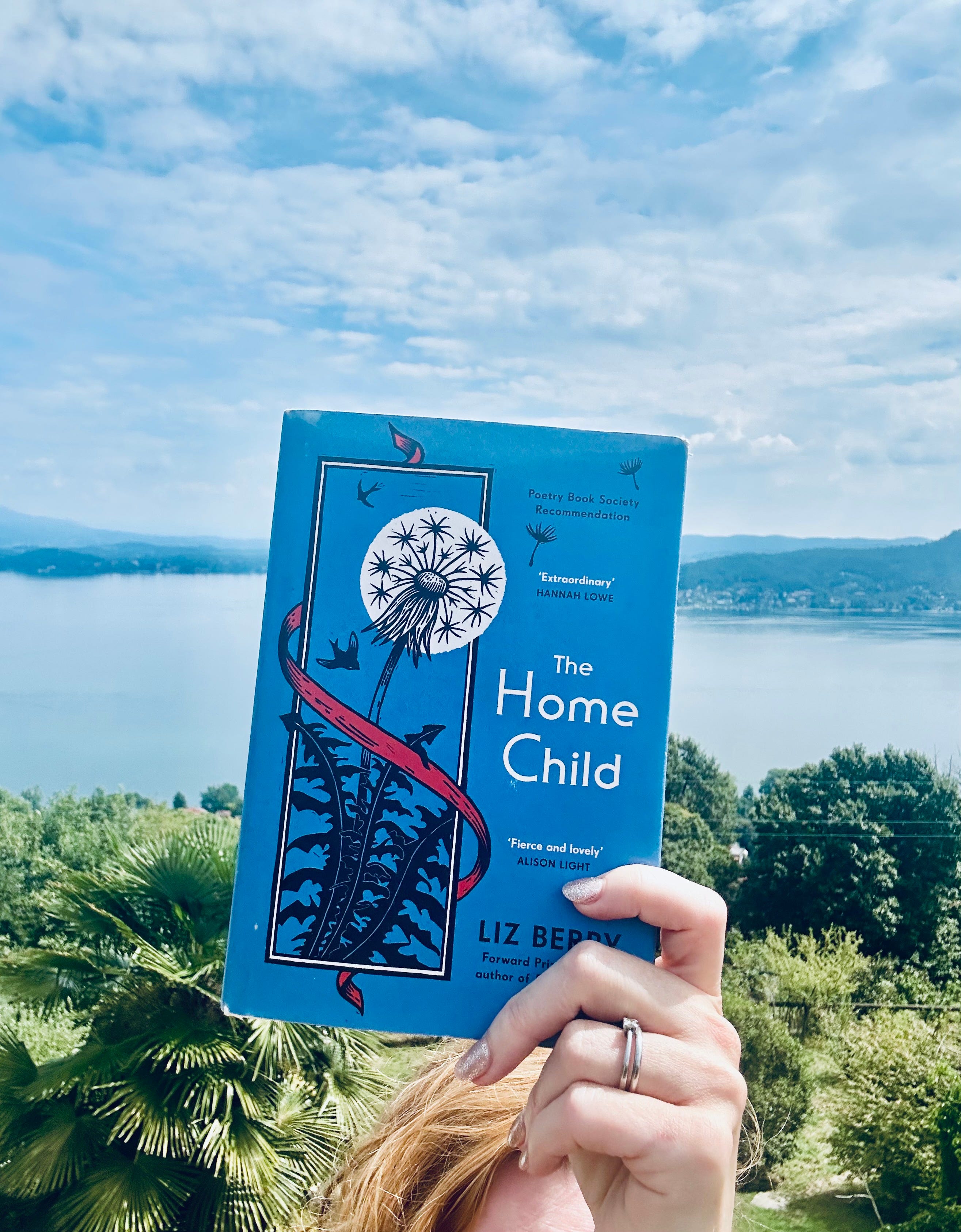
‘The Home Child’, inspired by the life of Berry’s great-aunt Eliza Showell, who was one of the over 100,000 poor British children forcibly emigrated to Canada between 1860 and 1960, has garnered prizes and accolades all over the place, and rightfully so. It is stunning. And it makes me ache, in six different ways.
I didn’t know about the Home Children until I read this book, and I can’t believe I didn’t know about them or the trauma they suffered. Prime Minister Gordon Brown made an official apology to them in 2010 and I missed that too. Eliza, in Berry’s imagining of her story, stands for all those children. The scale of the thing takes the wind out of me.
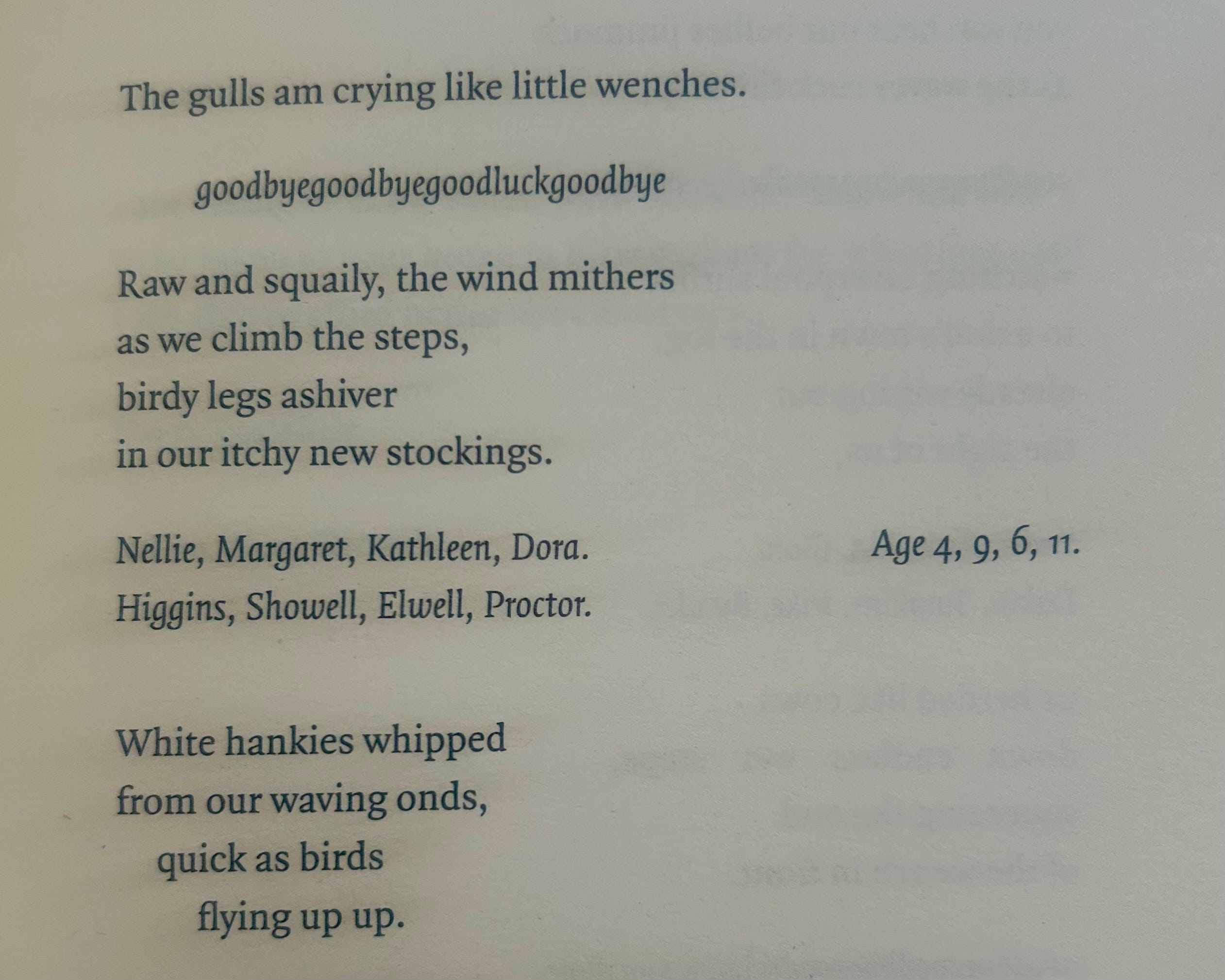
Eliza herself is painted so vividly, her physical hurts and the cold and her hurting heart, that I hurt with her. The way she wants her mum is something we know and something we cannot bear to imagine all at the same time, as we look at her ‘curled on her side on her narrow cot, eyes open, mouth ajar, watching her breath freeze in the air’ and then, worse ‘choose not to look’. (Snow Globe)
Berry’s poetry, woven with the Black Country dialect she is known for, is crafted with a light and deft touch that gives me the tingly ache that language does when it is this good. She moves from the prosaic to the precise, to the abstract, through free verse and form, without missing a beat. And always, there are birds, and animals, and the body. Here’s the whole poem I’m giving you this week:
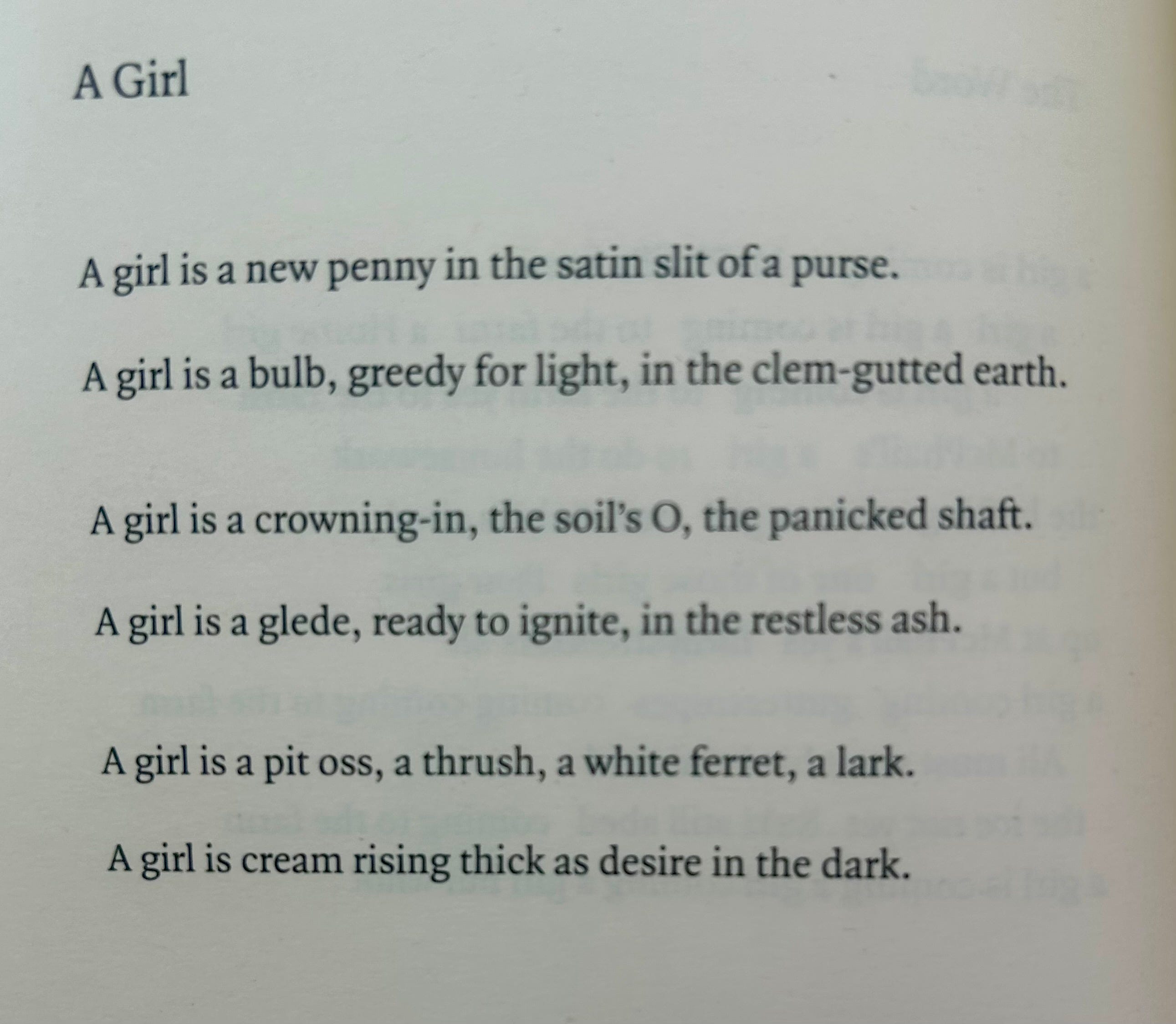
It makes me ache in that little green place where writers think ‘damn, I wish I could write like that.’ We mustn’t give that place too much oxygen.
It makes me realise the aching gaps in all our stories. This week I’m in Italy. My grandad was Italian, a POW in WW2, and there are so many parts of his story we don’t know. Someone once told me he had a trained jackdaw that could talk, and that’s all I know about that. But at least I know it. The Home Child takes the facts about Eliza’s life and fills the gaps with beautiful-painful detail, in full colour. It’s extraordinary. The details are fictional, but it doesn’t matter, because they are alive. How many stories have been totally lost, out of living memory, with no one to tell them?
There is an uncomfortable ache behind the eyes when you finish this book, for all the children across the world who continue to be displaced. We’d love to consign this cruelty to history when we close the book, but we can’t and mustn’t. The dedication of The Home Child reads For Eliza and all those who journey like her, with love. This book really is made with love, and maybe love, aching or not, is the opposite of choosing not to look.
Your question, ‘how many stories have been lost…with no one to tell them?’ makes me sad - you’re right. But it makes me so grateful for fiction and for writers who do fill in the gaps with their magic.
Love this book. Love how it sounds, love how it harrows, love how it shouts so lovingly, love how it wakes us.