
Back in the mists of the 2000s, the GCSE poetry paper for our exam board had a section that asked students to compare a selection of poems from two set poets. You got to choose Duffy and Armitage, or Heaney and Clarke. This was the anthology that made headlines in 2008, when the government decided that the rising tide of knife crime in the UK must be due to Carol Ann Duffy’s poem Education for Leisure, and removed it from the syllabus. Remember that? (Macbeth was absolutely fine though.) Anyway, that didn’t affect me because I was the only one in my department at the time who wanted to teach Heaney and Clarke. It was a perfect pairing. I had a lovely time teaching that syllabus. The students, who ended up spending great chunks of their exam time flipping back and forth through an unwieldy booklet of poems, not so much. But they didn’t hate Heaney, at least. And that’s how I got to know his famous, glorious, 1966 debut (debut!!! IMAGINE!!!) collection Death of a Naturalist. I could have taught those poems until the end of my days and never, ever got sick of them.
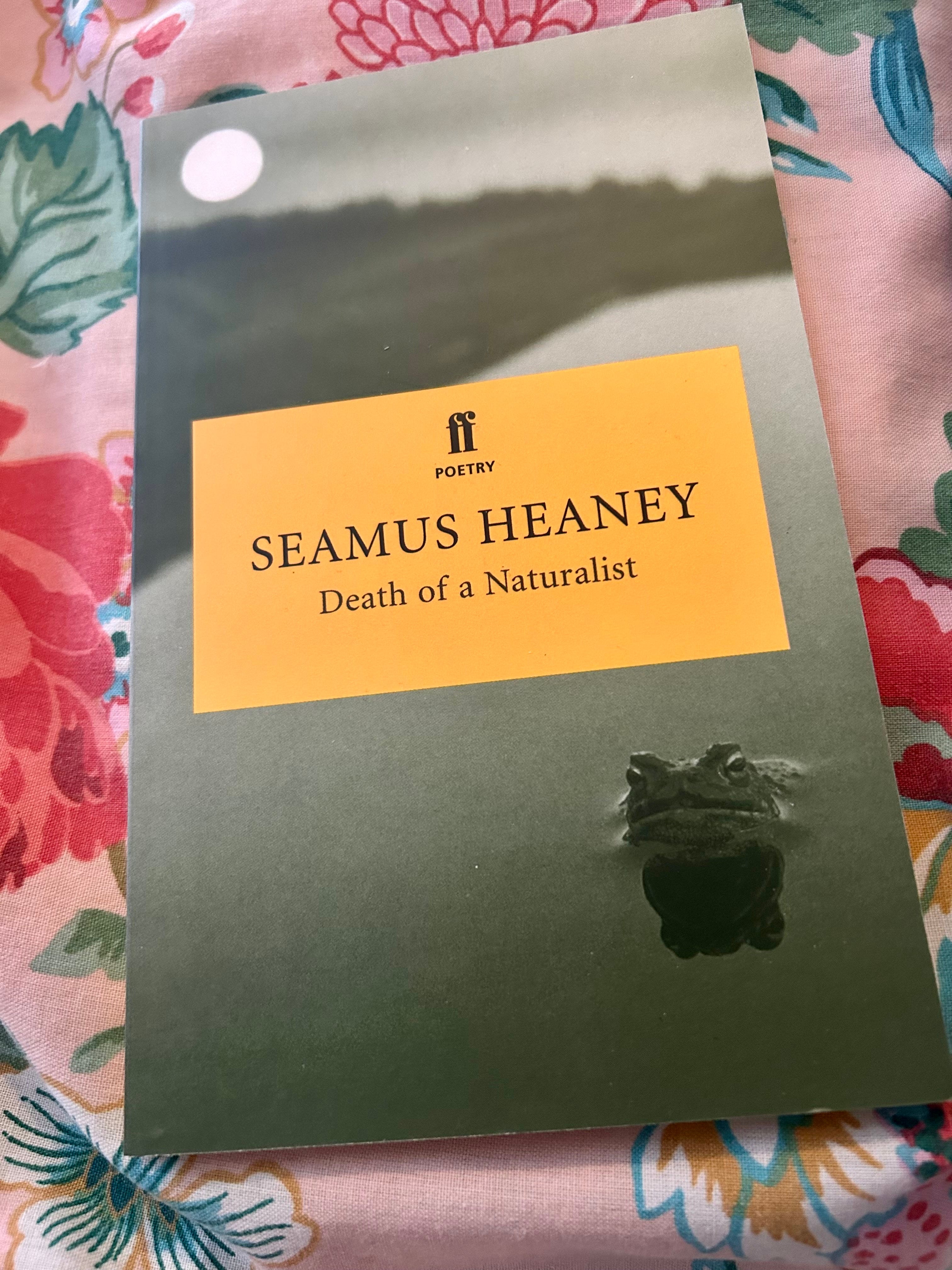
Here’s a poem. Impossible to pick from this book, but we’re at a good time of year for this one.
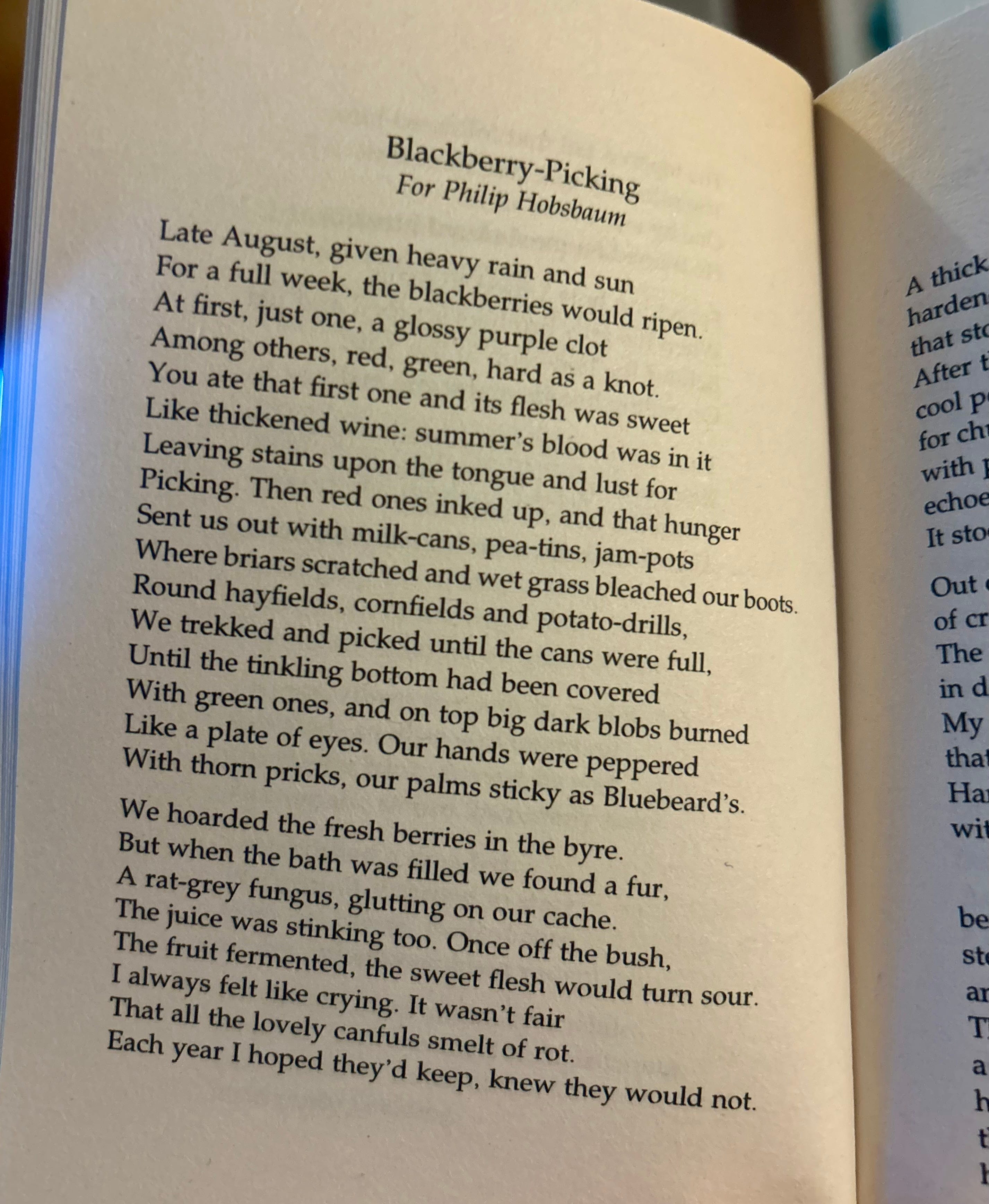
I love this poem. We all did this, country kids, all knew the lure of just another few, the ‘lust for picking’, because there were just so many and they were beautiful and they wanted picking. And we never learned. Heaney makes us remember the berries on our tongues and our fingertips, and then with a deft twitch of the volta in this luxuriously stretched sort-of sonnet, takes them away, like childhood memories, like childhood hopes, like childhood, like we did something wrong. It’s not fair, we think with him at the end, as that gorgeous poetry we’ve been given is replaced with a fur of normal, grown-up words. It’s not fair. It’s inevitable, though. So this poem becomes about more than berries. And maybe it becomes about more than childhood, too, in today’s world - those uneasy images of blood and Bluebeard and waste and the stinking consequences of greed or ignorance could stand for any of the dreadful things happening today. But he had us at blackberries.
And will you just look at the technique in this thing? The rhyming, slant-rhyming couplets, the meter, the chimes of sounds*, and all of it lying just under the surface of the story, and never getting in the way? I’ve wrangled some iambs and things in my time, as I’m sure a lot of you have. That sort of soft-edged precision is CRAZY HARD. It’s what I aim for, with difficulty, every day I write. And Heaney does it over and over again.
Throughout Death of a Naturalist, we are shown a childhood and a history that is ended, an innocence that can’t last, an anxious step into adulthood and the future. What steadies it in the end is memory, and love, and poetry. In the last poem of the collection, Personal Helicon, Heaney tells us ‘as a child, they could not keep me from wells’ and ends by explaining that, because staring into wells is ‘beneath all adult dignity [.] I rhyme / To see myself, to set the darkness echoing.’ It’s the best definition of poetry I know.
*look at what he’s doing with the /i/ - /k/ sound here - thickened / picking / inked / milk / tins / trekked / picked / tinkling / pricks / sticky and finally stinking . That’s the story right there, from the tinkle of the berries in the tin to the ick of what they become. Brilliant.
I’m getting alot from your posts. Thank you. I love the focus on small things.
I so enjoyed this Nia. Truly Seamus sets the darkness echoing in BlackBerry Picking and made me think’ of an alternative title – Birth of a Poet!