
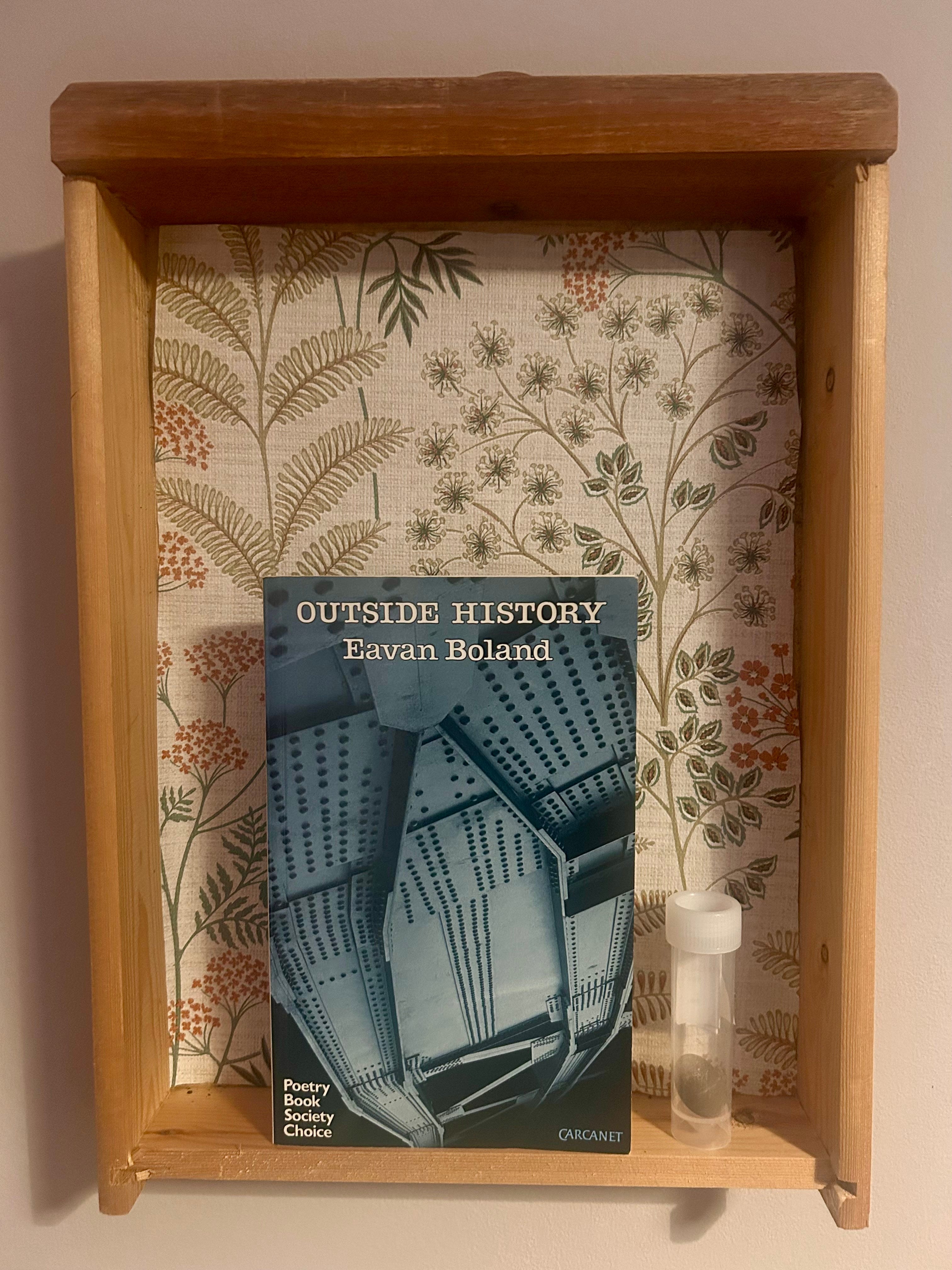
At the beginning of 2023, I had my gallbladder taken out due to the presence of a stone so impressive that someone from the surgical team came to find me afterwards to tell me she’d never seen anything like it. Naturally, I asked to keep it. They said no, but left it in a tube within my reach for a suspiciously long time. That same week, I discovered the poetry of Irish poet Eavan Boland. What a pair of gifts that week gave me. One of them looks better on the shelf, though.
The poem I came across first was The Black Lace Fan my Mother Gave Me, and it stopped me in my tracks. For context, I read a lot of poems. Like, a lot. I’m also relatively easy to please, poetically speaking, which means that I read a lot of poems I like, like, a lot. It’s lovely. But very occasionally, I read a poem I can’t get out of my head, that I am compelled to play on repeat for weeks or months like I did in 1992 with my cassette of the Joseph and the Amazing Technicolor Dreamcoat soundtrack (Jason Donovan version, obvs). I assume this happens to everyone (the poetry thing, not Joseph). I can never figure out exactly what the magic is that makes a poem shoot into my favourites like this, but maybe it’s more poetic that I don’t know. Either way, I fell hard for this one.
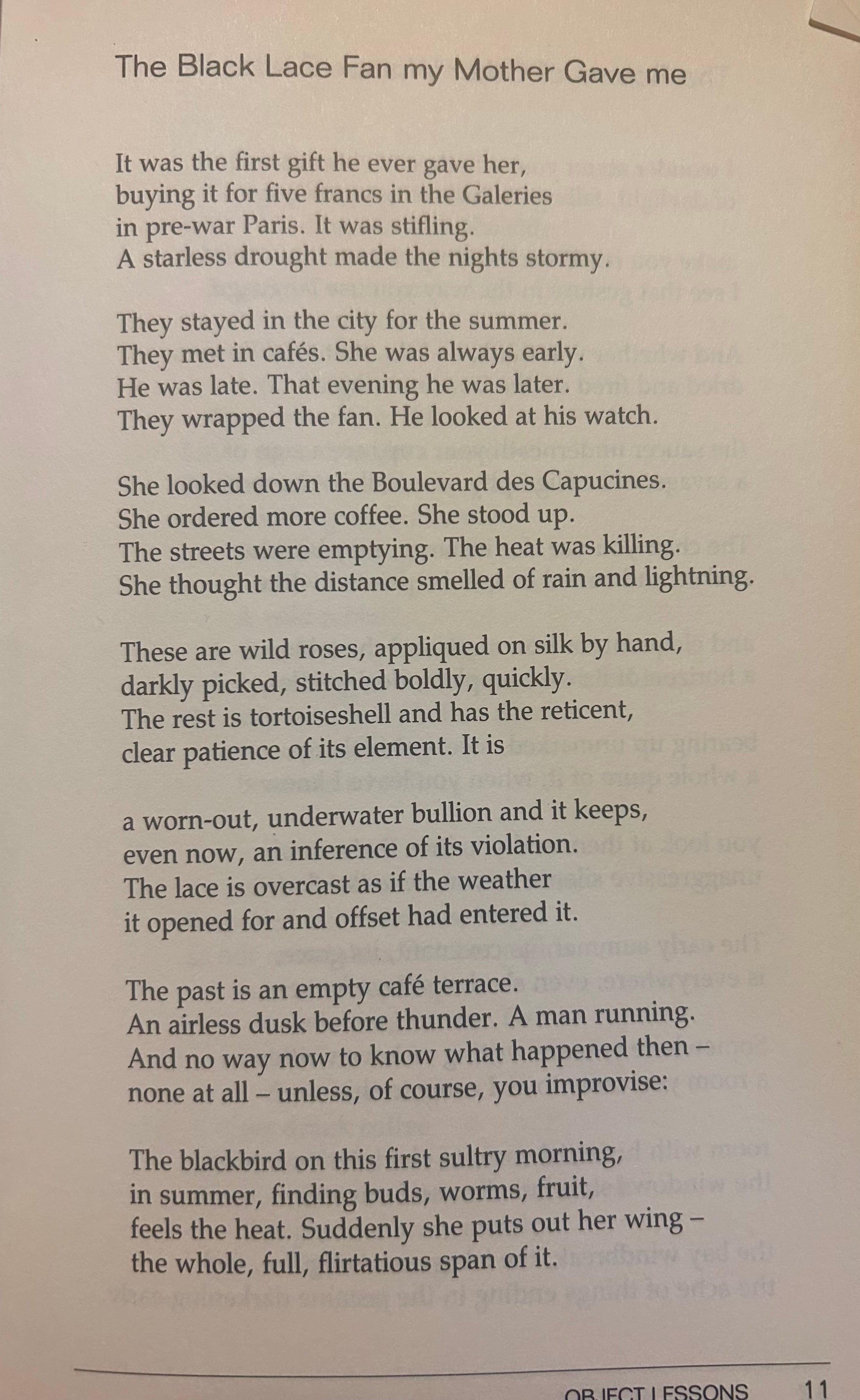
Oh, isn’t it gorgeous? The importance of this small object, so carefully described, its resonance through the years, offset by the impossibility of knowing its whole story. Or her mother’s whole story. Or the impossibility of ever knowing our whole history. The oppressive heat of this half-memory, and the blackbird who carries it beautifully into a half-moment in the right now. When poetry teachers tell you end on an image, this is what they mean. This is how it’s done.
It’s possible that, in 2023, having had a small object recently removed, I was more than usually open to the idea of the enormity of tiny things. But I’m no less enchanted by this poem now than I was then. This collection, by 1990 already something like Boland’s seventh, is teeming with objects and specifics - her mother’s stockpot, a mug with a hunting scene, the ‘sugar-barley iron of a garden chair’ - which ground and colour the broad profundities and classical allusions that lie in seams in these poems. You won’t mistake this for cosy, domestic poetry. It uses those themes to tell us about women, and writing, and Ireland, and love, and the past, and the now. It’s remarkable writing, and I’m so happy to have spent time with it this week.
Eavan Boland only died in 2020, after a stellar career. I wish I’d found her earlier. But I’ve been making up for it and she’ll be making more appearances on this Substack. The gallstone, thankfully, will not.
I love this poem, Nia. The way Eavan Boland moves between memory and the physicality of the fan is magnificent, and the final image of the blackbird opening her wing is so memorable.
I admire her for the way she makes women’s intimate lives, their objects, rooms, inheritances and half-recovered histories, central to how we understand and experience history.
Thank you again Nia for nudging me to go back to the wonderful Eavan Boland. Ages ago I bought an old copy of Night Feed, her first collection, which I read had broken new ground by writing glorious poems about life with a new born baby. It’s stunning. Later I picked up an old copy of Outside History (1990) and more recently her New Collected Poems (2005). A truly gifted wonderful poet I will return to. I think she could be my desert island poet!